
Jaggaer
Procure-to-pay and supplier lifecycle management platform for large organizations and public sector buyers. Jaggaer centralizes sourcing, contract lifecycle management, supplier onboarding, spend analytics, and procurement operations across complex, multi-system environments.
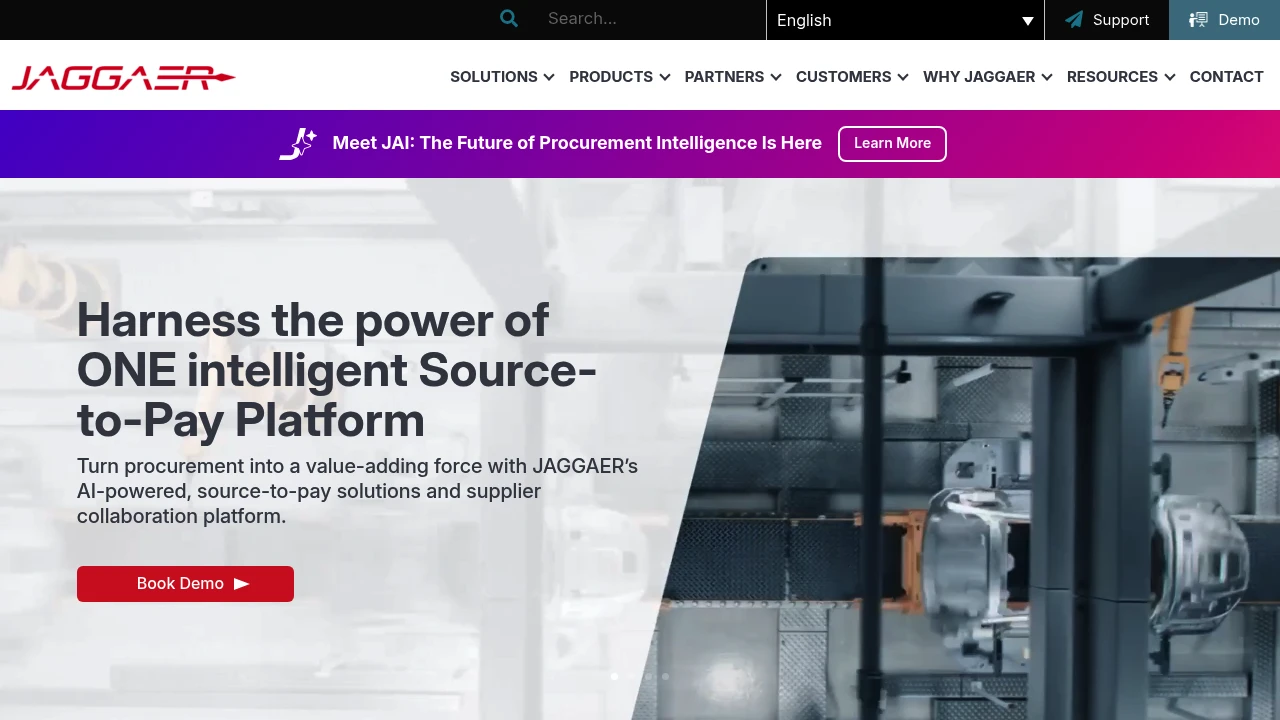
What is jaggaer
Jaggaer is an enterprise-grade procurement and supplier management suite that supports source-to-pay, supplier lifecycle management, contract management, and spend analytics. The platform is used by large corporations, universities, and public sector organizations to consolidate purchasing, enforce compliance, and gain visibility into indirect and direct spend. Jaggaer packages modular solutions that can be deployed across regions and integrated with enterprise resource planning (ERP) systems.
Jaggaer combines SaaS applications, a supplier network, and professional services to address complex procurement workflows, supplier enablement, and strategic sourcing. The product set is designed for organizations that need configurable workflows, advanced catalog management, and audit-ready controls. Jaggaer also emphasizes supplier collaboration, catalog punch-out standards, and analytics for drive-down cost and mitigate supply risk.
The vendor publishes product information and customer resources across its website; for solution-specific details and deployment options see Jaggaer's procurement and supplier management pages: View Jaggaer solutions and deployment options (https://www.jaggaer.com/solutions).
Jaggaer features
Jaggaer groups capabilities into modular applications that organizations can adopt individually or as an integrated suite. Core capability areas include sourcing, supplier management, contract lifecycle management (CLM), spend analytics, procurement/punchout catalogs, invoicing, and supplier risk and performance.
Key platform features include configurable workflow engines for approvals and requisitions, support for cXML/OCI punchout catalogs, guided sourcing events (RFx, auctions), advanced contract templates and clause libraries, supplier onboarding portals, vendor performance scoring, and integrated e-invoicing. Jaggaer also provides catalog content governance, catalog reconciliation, and catalog integration tools for large supplier networks.
The platform includes analytics and dashboards that combine transactional, contract, and supplier data to surface savings opportunities, compliance gaps, and tail spend. Jaggaer also supports advanced security controls, role-based access, single sign-on (SSO) and centralized audit trails for compliance and procurement governance.
What does jaggaer do?
Jaggaer automates and centralizes procurement activities from sourcing through payment, designed to reduce maverick spend and shorten sourcing cycles. It orchestrates supplier onboarding, manages sourcing events, automates purchase order and invoice matching, and enforces contract terms across purchases.
The system helps procurement teams run competitive sourcing events (RFx and auctions), model savings scenarios, and convert negotiated agreements into catalog- and contract-driven purchasing. Supplier portals let vendors respond to RFx events, maintain catalogs, submit invoices, and participate in performance evaluations.
Jaggaer also aggregates procurement data for spend analytics, compliance reporting, and supplier risk monitoring. The platform is often used to rationalize supplier bases, improve contract compliance, and integrate procurement into broader finance and ERP systems.
Jaggaer pricing
Jaggaer offers custom enterprise pricing that is quoted based on modules selected, number of users, transaction volumes, integrations, deployment scope, and support levels. There is no single public per-user or per-month price: most Jaggaer customers purchase modular bundles and receive a tailored contract and implementation quote.
Jaggaer offers these pricing plans:
- Free Plan: Not typically available — Jaggaer focuses on enterprise and institutional customers and does not publish a consumer/free tier.
- Starter: Entry-level module packaging for limited-scope procurement automation; pricing is quoted per contract.
- Professional: Mid-tier bundles that include sourcing, supplier management, and basic analytics; procurement transaction volumes and supplier network usage influence the price.
- Enterprise: Full suite deployments with advanced analytics, CLM, global support, and premium services — priced through custom enterprise agreements.
Because pricing is customized, organizations should request a tailored quote. Check Jaggaer's current pricing and enterprise options by contacting their sales team through Jaggaer's contact pages (https://www.jaggaer.com/contact) or by reviewing solution-specific procurement pages on their site (https://www.jaggaer.com/solutions).
How much is jaggaer per month
Jaggaer does not publish a standard per-month rate and uses custom monthly or annual billing tied to contract terms. Enterprise procurement platforms like Jaggaer are typically sold as annual subscriptions with fees based on modules, transactions, and user tiers rather than a simple per-seat monthly price.
For planning, procurement teams typically budget for subscription fees plus implementation and integration costs: subscription charges can be billed monthly or yearly depending on the negotiated contract. To get an accurate per-month estimate, request a quote from Jaggaer with your expected transaction volumes and required modules.
Vendor engagement for pricing can also surface discounts for multi-year commitments, volume thresholds, and bundled professional services.
How much is jaggaer per year
Jaggaer does not publish standard annual prices; contracts are quoted on an annual basis based on scope and modules. Annual costs for enterprise procurement suites vary widely depending on whether the buyer requires advanced analytics, CLM, supplier network access, and global deployments.
Typical enterprise procure-to-pay contracts for large organizations often fall into multi-year agreements; Jaggaer pricing proposals will include subscription, implementation, integration, and ongoing support fees. For an accurate annual rate, contact Jaggaer's sales team and share details about your ERP integrations, expected PO and invoice volumes, and supplier ecosystem.
Jaggaer also publishes case studies and resources that illustrate project scopes and outcomes; see Jaggaer's customer resources and case studies for context on deployment sizes (https://www.jaggaer.com/resources).
How much is jaggaer in general
Jaggaer pricing typically ranges from mid-five figures per year to seven-figure enterprise contracts depending on modules and scale. This reflects the platform’s focus on global enterprise customers with large transaction volumes, complex supplier networks, and extensive integration needs.
Lower-end engagements (smaller institutions or single-module deployments) may be significantly less costly, while full-suite, multi-country rollouts with integration to multiple ERP instances and customized workflows can reach higher enterprise price points. Implementation, data migration, supplier enablement, and change management are additional budget items to include.
For precise budgeting, organizations should request a proposal that itemizes subscription fees, implementation services, integration costs, and annual support or maintenance fees.
What is jaggaer used for
Jaggaer is used to automate procurement operations, centralize sourcing, manage supplier lifecycles, and improve spend visibility. Procurement teams use Jaggaer to run sourcing events, publish catalogs, issue purchase orders, process e-invoices, and manage contracts from negotiation through expiry. The platform aims to close the loop between sourcing outcomes and transactional purchasing so negotiated savings translate into realized cost reductions.
Beyond transactional automation, Jaggaer is used for supplier risk assessment and compliance monitoring. Supplier onboarding workflows validate supplier credentials, financial ratings, and compliance documents while supplier performance modules track delivery and quality metrics. Public sector and higher-education buyers commonly use Jaggaer to meet auditability and vendor registration requirements.
Jaggaer is also applied in category management and strategic sourcing programs. Category managers use advanced sourcing tools to evaluate supplier proposals, run reverse auctions, and model total cost of ownership. Analytics dashboards combine contract, PO, and invoice data to prioritize sourcing opportunities and measure contract compliance.
Pros and cons of jaggaer
Pros:
- Jaggaer offers a comprehensive suite covering sourcing, CLM, supplier management, procurement, and invoicing, which reduces the need for multiple vendors.
- The platform supports enterprise-grade integrations (ERP connectors, cXML/OCI punchout, EDI) and global deployments suitable for multinational buyers.
- Robust supplier network and onboarding tools help organizations centralize vendor data and accelerate supplier enablement across complex supplier ecosystems.
Cons:
- Jaggaer's licensing and implementation model is geared toward medium-to-large enterprises; smaller organizations may find the total cost and implementation effort prohibitive.
- Because Jaggaer is modular and highly configurable, deployments can require substantial professional services and change management to realize full benefits.
- Custom integrations and complex workflows can extend time-to-value if buyers do not budget for adequate implementation resources and provider consulting.
When evaluating Jaggaer, weigh the benefits of an integrated enterprise procurement suite against implementation lead times and total cost of ownership. Organizations with dedicated procurement transformation budgets typically capture the greatest ROI from Jaggaer’s analytics and supplier management features.
Jaggaer free trial
Jaggaer does not generally offer a public free trial for its enterprise procurement suite; most engagements begin with a scoping conversation and a demo tailored to the buyer’s use cases. Vendors in this category commonly provide sandbox environments and proof-of-concept deployments for qualified prospects to validate workflows and integrations.
If your organization requires hands-on evaluation, request a sandbox or proof-of-concept during the sales process. Jaggaer’s team can provision a demo environment that mirrors the modules you intend to adopt and can demonstrate ERP integrations, punchout catalog behavior, and sourcing workflows.
To arrange a demo or ask about trial options, contact Jaggaer through their official contact channels: Request a demo or proof-of-concept via Jaggaer's sales contact (https://www.jaggaer.com/contact).
Is jaggaer free
No, Jaggaer is not free. The company targets enterprise and institutional buyers with subscription-based licensing and professional services; free consumer-tier offerings are not part of its standard commercial model. Pricing is custom and varies by modules, scale, and implementation requirements.
Jaggaer API
Jaggaer provides API and integration capabilities designed to connect procurement workflows with ERPs, financial systems, and supplier ecosystems. APIs typically support RESTful interfaces for catalog management, purchase order exchange, invoice processing, and supplier data synchronization, while legacy SOAP endpoints may exist for specific integration use cases.
Integration patterns supported include cXML/OCI punchouts for catalog suppliers, EDI for large trading partners, standard REST APIs for transactional data exchange, and middleware connectors for leading ERPs such as SAP and Oracle. Jaggaer also supports single sign-on protocols (SAML), SCIM for user provisioning, and data export endpoints for analytics.
For developers and integrators, Jaggaer publishes developer documentation and implementation guides on request as part of customer onboarding. For details about available API endpoints, authentication methods, and technical integration guides, consult Jaggaer's developer and integration resources or contact Jaggaer implementation services (https://www.jaggaer.com/solutions/integration).
10 Jaggaer alternatives
- Coupa — Cloud-based spend management platform that emphasizes user experience, community intelligence, and rapid deployment for procurement and expense management.
- SAP Ariba — Large enterprise procurement and supplier network solution with deep ERP integration for SAP landscapes and broad global supplier connectivity.
- Oracle Procurement Cloud — Part of Oracle Cloud ERP offering comprehensive sourcing, procurement, and supplier management tightly integrated with Oracle financials.
- Ivalua — Procurement suite known for configurability, supplier management, and advanced sourcing capabilities tailored to complex procurement organizations.
- GEP SMART — Unified procurement platform combining source-to-pay functionality with category management and analytics, often targeted at global enterprises.
- Basware — Strong e-invoicing and accounts payable automation with analytics and networked procurement capabilities.
- Proactis — Procurement and spend control solutions for mid-market and enterprise customers with catalog and supplier management modules.
- Zycus — Source-to-pay automation offering AI-driven sourcing and supplier management features.
- Tradeshift — Supplier collaboration, invoicing, and marketplace capabilities with emphasis on network effects.
- Corcentric (Determine) — Procurement and CLM capabilities with strong invoice-to-pay functionality.
Paid alternatives to jaggaer
- Coupa — Known for rapid deployment and community-driven benchmarking; strong for companies seeking cloud-native spend management.
- SAP Ariba — Best for organizations already invested in SAP ERP and looking for deep integration with SAP master data and financial processes.
- Oracle Procurement Cloud — Preferred where Oracle Cloud ERP is the backbone; offers end-to-end integration with Oracle financials.
- Ivalua — Highly configurable and capable of modeling complex sourcing requirements for large global enterprises.
- GEP SMART — Good fit for organizations seeking combined procurement software and procurement outsourcing/advisory services.
Open source alternatives to jaggaer
- ERPNext — Open source ERP with procurement modules including purchase orders, supplier records, and basic purchase workflows; suitable for small-to-mid organizations that can support self-hosting and customization.
- Odoo (Community Edition) — Open source ERP framework with procurement and purchase app modules; flexible for organizations willing to extend core modules and manage integrations.
- OpenBoxes — Open source supply chain and inventory system focused on healthcare and logistics; includes procurement-adjacent functionality appropriate for specific public health or NGO contexts.
Frequently asked questions about Jaggaer
What is Jaggaer used for?
Jaggaer is used for enterprise procurement, sourcing, supplier management, and contract lifecycle management. Organizations use Jaggaer to standardize purchasing, run sourcing events, onboard and assess suppliers, and connect negotiated contracts to transactional purchasing and invoicing. It is aimed primarily at large enterprises, public sector organizations, and higher education institutions.
Does Jaggaer integrate with SAP?
Yes, Jaggaer integrates with SAP ERP systems. Integration patterns commonly include SAP-certified connectors, middleware-based integrations, and documented API flows for synchronizing master data, purchase orders, and invoice transactions between Jaggaer and SAP environments.
How much does Jaggaer cost per user?
Jaggaer does not publish a standard per-user rate; it uses custom pricing based on modules and scale. Enterprise procurement suites like Jaggaer are typically quoted on contract value and module scope rather than a fixed per-user fee. Contact Jaggaer sales for a tailored quote (https://www.jaggaer.com/contact).
Is there a free version of Jaggaer?
No, Jaggaer does not offer a free consumer-tier product. The company focuses on enterprise and institutional customers and delivers subscription-based solutions and professional services rather than a public free plan.
Can Jaggaer be used for e-invoicing?
Yes, Jaggaer supports e-invoicing and invoice-to-pay automation. The platform includes invoice capture, three-way matching, automated approvals, and exception handling; it also supports electronic invoice formats and integration with financial systems for payment processing.
Does Jaggaer offer supplier portals?
Yes, Jaggaer provides supplier portal capabilities for onboarding, catalog management, and invoice submission. Suppliers can register, maintain profile and compliance documents, respond to RFx events, publish catalog content via punchout or hosted catalogs, and submit invoices depending on buyer-enabled features.
What procurement processes can Jaggaer automate?
Jaggaer automates source-to-pay processes including sourcing, purchase requisitioning, PO issuance, invoice processing, and supplier management. It streamlines RFx/auctions, contract lifecycle, catalog purchasing, and invoice matching to reduce manual touchpoints and improve compliance.
How secure is Jaggaer?
Jaggaer provides enterprise security controls, role-based access, and audit trails. The platform supports encrypted data transport, SSO/SAML integration, and compliance features that help meet enterprise security and regulatory needs; customers often request details of certifications and hosting arrangements during procurement.
Can Jaggaer work with punchout catalogs?
Yes, Jaggaer supports cXML/OCI punchout and hosted catalog integrations. These standards allow buyers to access supplier catalogs, add items to requisitions, and keep catalog content synchronized across vendor systems.
Where can I get Jaggaer technical documentation and API guides?
Jaggaer provides technical documentation and integration guides to customers and implementation partners. For developer documentation, API reference, and integration playbooks, contact Jaggaer implementation services or request resources via their solutions and integration pages (https://www.jaggaer.com/solutions/integration).
jaggaer careers
Jaggaer hires professionals across product development, professional services, customer success, sales, and implementation roles to support global procurement deployments. Career opportunities typically include roles for integration specialists, business consultants, data analysts, and software engineers with experience in procurement technologies and enterprise integrations.
Because Jaggaer serves large institutional customers, the company often seeks consultants with domain expertise in procurement, supply chain, and ERP integration. For current openings and role descriptions, check Jaggaer's corporate pages and careers portal: Jaggaer careers and company information (https://www.jaggaer.com/company).
Jaggaer also provides structured onboarding and role-specific training for new hires, especially those who will support client implementations. Many technical and consulting roles require experience with cXML/OCI, EDI, REST APIs, and procurement best practices.
jaggaer affiliate
Jaggaer maintains partner and reseller programs that include system integrators, consulting firms, and technology partners. Affiliate and partner relationships typically involve joint go-to-market activities, implementation partnerships, and certification programs for Jaggaer product specialists.
Organizations interested in partner or reseller opportunities should contact Jaggaer’s partner management team to learn about the onboarding process, partner tiers, and certification requirements. Partner programs are structured to support implementations, integrations, and joint customer engagements.
Where to find jaggaer reviews
Independent reviews and customer feedback for Jaggaer can be found on enterprise software review sites and industry analyst reports. Common sources include software review platforms, procurement technology analyst briefs, and case studies published on Jaggaer’s website.
For hands-on insights, consult peer reviews on enterprise software review sites and read Jaggaer customer case studies to understand deployment scope and realized benefits: Jaggaer customer resources (https://www.jaggaer.com/resources). Additionally, reach out to reference customers provided by Jaggaer to validate suitability for large-scale procurement programs.

Similar to Jaggaer


